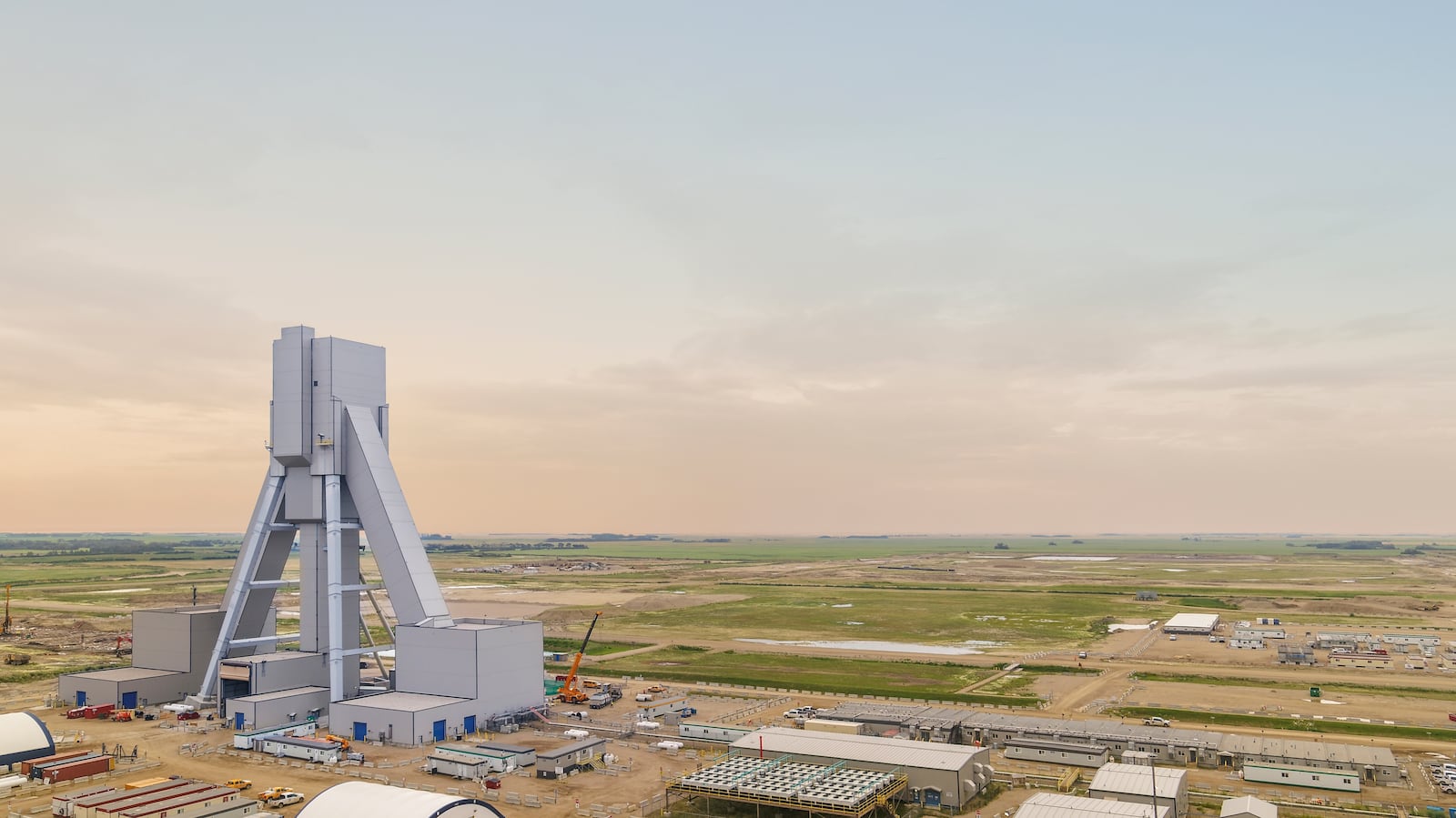
The world’s largest mining company is flagging cost overruns at its Saskatchewan potash mine development. BHP warned in an update Thursday morning that its Jansen project, located around 155 kilometres southeast of Saskatoon, is facing cost overruns of over $2 billion, with total investment in Stage 2 of the greenfield mine development rising to $6.9 billion. But according to economist Erin Weir, those rising costs won’t affect the mining giant’s bottom line, since the Government of Saskatchewan is allowing the company to write off 120 per cent of its capital construction costs against the taxes it will owe on future profits. “Since the Government of Saskatchewan allows BHP to write off 120 per cent of the amounts invested, Jansen will not pay potash production tax for many years,” said Weir, a former Member of Parliament for Regina-Lewvan. Weir says he supports the idea of allowing the company to write off the cost of building, but not at a rate higher than 100 per cent. The first phase of the Jansen project, Stage 1, is expected to start production by mid-2027. BHP estimates it will produce roughly 4.2 million tonnes of potash per year. Stage 2, which was delayed last year from a 2029 to 2031 opening date, is expected to increase production at the mine to about 8.5 million tonnes annually. Since announcing the delay, BHP conducted an extensive review of the Stage 2 project. It says the majority of the cost increase stems from additional construction hours and the quantities of materials needed to complete it. “During the review, key underground construction activities and engineering continued to progress,” BHP said in its update. “At the end of May 2026, Jansen Stage 2 is 16 per cent complete with engineering at 83 per cent complete, de-risking the estimate for remaining work.” The mining giant says once complete, the two phases of the mine will deliver about 10 per cent of the world’s potash production. Based on its price estimates and expected output, BHP believes Jansen Stage 2 will have a rate of return of around 11 per cent, and a payback period of eight years. “Once Jansen Stage 2 ramps up, we continue to expect that the combined Jansen mine will be the lowest unit cost Canadian potash mine at US$114-130/t3 in line with unit cost estimates at sanction, reinforcing Jansen’s durable competitive advantage in the potash market and further supporting BHP’s long-term growth strategy in future facing commodities.” Weir, who published a report last month advocating for reforms to the province’s royalty and tax structure for the potash industry, argues the government is failing to recognize the strength of its bargaining power and it could easily be generating billions more in tax and royalty revenues. “The provincial government’s sweeping royalty and tax concessions mean that BHP will contribute very little. To the extent that Jansen undercuts potash prices for existing mines, it could lower provincial revenues,” he said. Between 2000 and 2025, the value of potash sales in Saskatchewan quintupled, predominantly because the price of the mineral tripled. Accounting for the Consumer Price Index, potash prices surpassed inflation by 131 per cent, according to Weir. He says the high prices motivated higher output. Tonnage increased by 76 per cent since 2000, and the higher price made existing production more profitable – with the most notable windfalls during price spikes in 2008 and 2022. “The province’s royalties, production tax and resource surcharge together typically collect no more than 15 per cent of the value of potash sales, or under $1 billion in all but a few years,” Weir wrote. “The prospect of significantly expanded potash production reducing provincial revenues should motivate a long overdue review of Saskatchewan’s royalties and taxes, which the following analysis suggests have forgone nearly $12 billion of potash revenue over the past decade.” Saskatchewan is also one of the only major potash-producing regions open to investment from western firms. The producers, including Russia, China and Belarus, are dominated by state-owned monopolies. “Unfortunately, the province has not used its strong bargaining position to negotiate the best possible return,” said Weir. BHP says Stage 1 of the Jansen mine is on track and will likely be ready for production in mid 2027. In preparation, BHP struck an agreement with both major railways earlier this month to get its potash to terminals for export, with connecting lines running to both rail networks.
|